Karen Graubart
Professor

- Office
- 416 Decio Faculty Hall
Notre Dame, IN 46556 - Phone
- 574-631-0377
- kgraubar@nd.edu
Specializations
Early Modern, Empires, Gender, Labor, Legal, Race and Ethnicity, Urban
Geographies
Europe, Latin America
Biography
Karen Graubart is a social and legal historian of the early Spanish empire. Her research looks at the ways that disenfranchised peoples of all kinds experienced colonialism and enslavement and — using a mixture of tools from their colonized environment — made sense of the world. These were elite Indigenous women in early colonial Peru, who argued to viceregal authorities that their political culture enabled women to inherit the highest political office available to conquered communities, the cacicazgo. Or they were enslaved men and women who collectively seized their freedom through fugitivity, and then negotiated with Spanish governors to form free towns, paying tribute and policing other fugitives in exchange for an end to hostilities. They were also urban residents, Indigenous people who purchased homes in cities where they were excluded from running for municipal office but invented a language of creolization to celebrate their status; or Muslims in fifteenth century Christian Seville, who also created titles to reflect a hierarchy that promoted artisans within a relatively poor and disenfranchised but self-governed community.
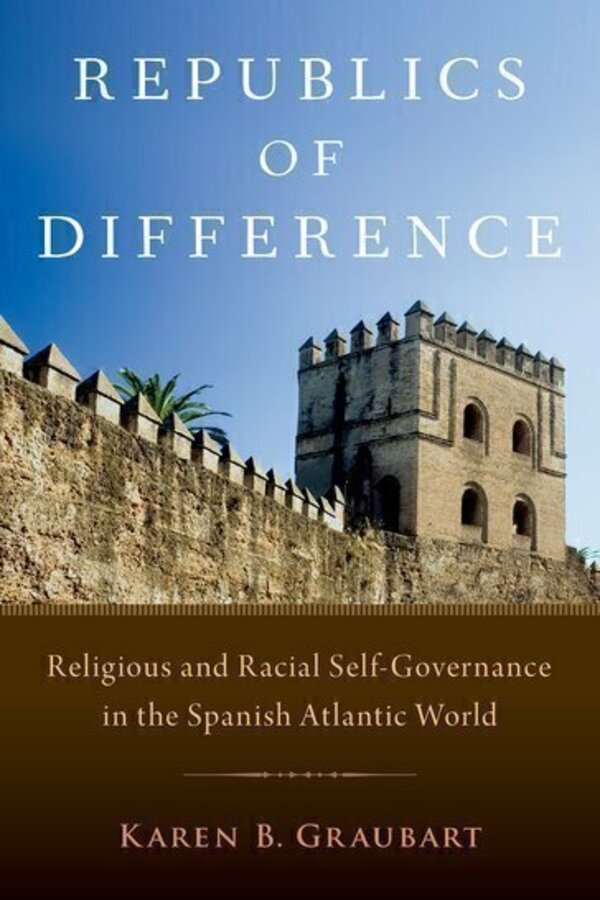
She tells these stories not to romanticize individual accomplishments but to think about the strategies people, as individuals or communities, used to carve out spaces for themselves in a world that they could not dominate. She is the author of two award winning books, With Our Labor and Sweat: Indigenous Women and the Formation of Colonial Society in Peru, 1550-1700 and Republics of Difference: Religious and Racial Self-Governance in the Spanish Atlantic World, as well as many articles.
She is currently completing a microhistory of a free Black community in 16C Panama, tentatively titled Making Malambo: Black Collective Action in Early Panama, as well as a collectively-authored manual for the ethical use of fragmentary historical materials. She has received many notable fellowships, most recently from the National Endowment for the Humanities, the Institute for Advanced Studies (Princeton) and the John Simon Guggenheim Memorial Foundation.
Research Interests
Colonial Latin America; Gender and Sexuality, Slavery, Archival Methods, Race/ethnicity, Queer Studies
Education
Ph.D., University of Massachusetts (2000)
BA Barnard College -- Columbia University (1984)